研究
自适应完整性研究的基础
致博学家、学者、研究人员、治疗师以及任何感兴趣的人;感知严谨与生活经验可能相遇之处。
自适应整体性
戴维·玻姆的遗产
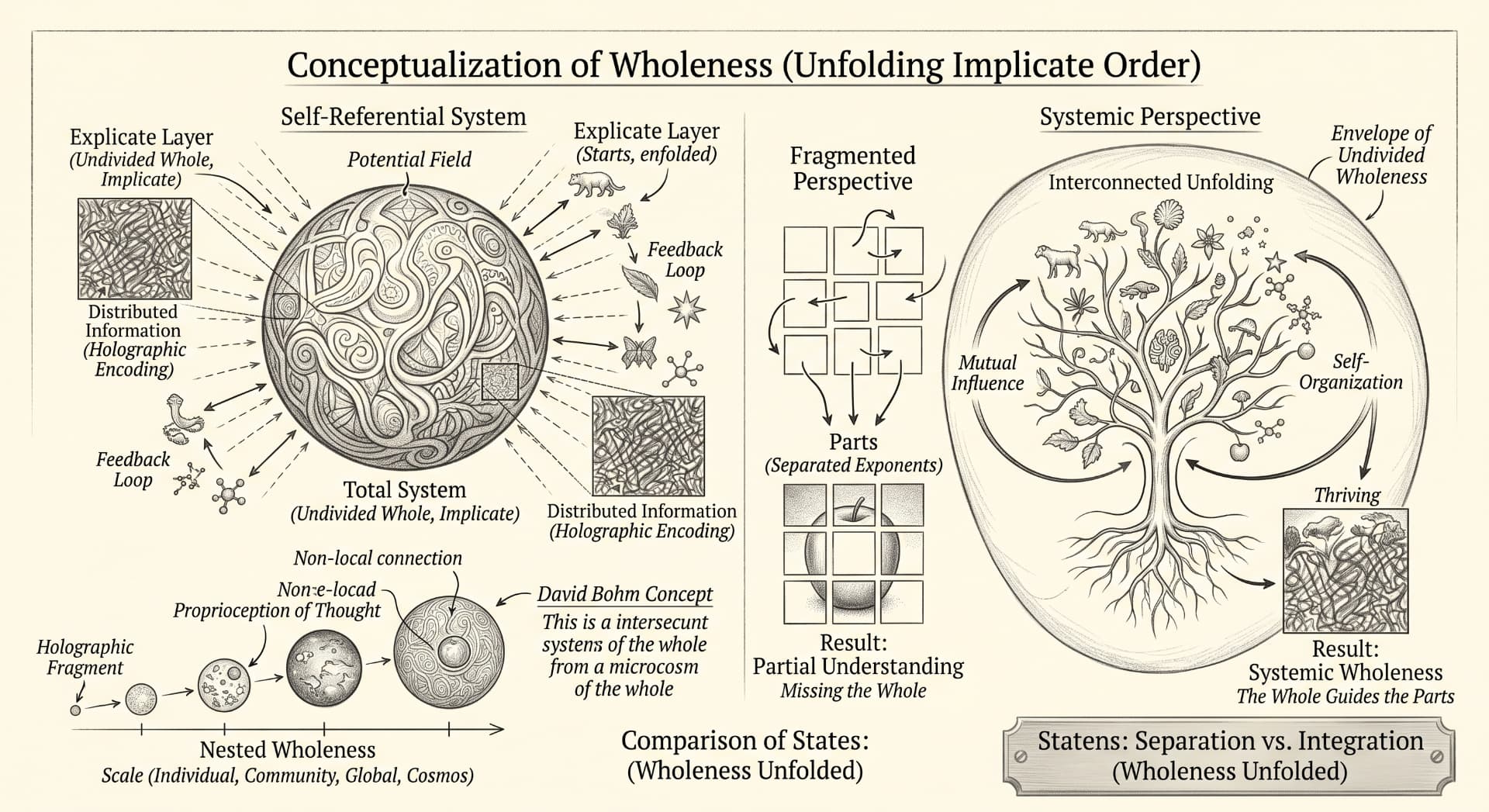
受戴维·玻姆对碎片化批判的启发,我们的工作深深植根于他“不可分割的整体性”概念。标准的问题解决方法往往将复杂问题拆分为孤立的部分,在各自的孤岛中处理症状,却错失了潜在的动态。
我们设计工具与框架,将焦点从局部修补转向系统性的整体性。通过将挑战视为单一动态系统的相互关联的映射,我们的方法揭示了更深层、潜在的模式如何引导表层结果。我们不再将僵硬的解决方案强加于分离的部分,而是帮助团队和领导者与整体的流动相协调,从而培育可持续的、系统性的变革。
支撑这一框架
支撑这一框架的是一个基本的本体论优先事项:整体性优先。自适应不是将一个复杂系统视为孤立组件的集合,这些组件组合起来形成一个整体,而是从一个已然整合的场的基态运作。
非局部场和连续的生物符号过程先于物理特化。个体部分——无论是神经网络、内分泌轴还是特定的身体组织——并不产生整体性;相反,它们是未分化整体展开为物理形式的局部化、显性表现。在这种观点下,自适应并非孤立部分为达到平衡而进行的机械尝试,而是非局部场将其局部化投射协调回动态异稳态的持续运动。
Core Principles of Primordial Wholeness
Priority of the Nonlocal Field: The witnessing zero-point field (E=0) exists prior to any division into subject or object, acting as the unpolarized background from which localized phenomena arise.
Localization as Unfolding: Biological structures, nervous systems, and somatic sensations are localized expressions (explications) of a deeper, undivided continuum.
Self-Adaptation as Whole-to-Part Orchestration: Adaptation is an inherent property of the whole regulating its parts, ensuring that localized disruptions are continuously invited back into the coherence of the undivided state.